Medlar Fruit Trees
Medlar Trees. The original apple! - The Medlar tree is small and handsome with beautiful blossom. An old and exotic looking fruit, but it is a native of Europe and not the tropics. For gardeners looking to grow something different, the Nottingham Medlar combines history, beauty and exceptional fruit in one easy-to-grow tree.
Benefits of Growing a Nottingham Medlar
- A rare and traditional heritage fruit tree
- Produces beautiful white blossom in spring
- Compact size, ideal for smaller gardens
- Unique fruits with a rich, sweet flavour
- Self-fertile, so only one tree is required
- Reliable and hardy in the UK climate

 Grid

 List
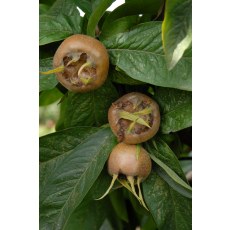

Medlar Fruit Trees
Where to Grow a Medlar
Medlars aren't really fussy. They prefer a warm, sheltered site with moist, well-drained soil (don't we all?) but will do well in most soils, so long as they're not excessively chalky or badly drained. It's worth watering them in very dry spells, especially in the first three or four years of life.
Strong winds can damage the flowers, so it's best to ensure they're not too exposed. They will tolerate partial shade - mine is at the back of an overshadowed, east-facing bed that only receives sun for a couple of hours a day, but it still produces well.
Harvesting Medlar Fruit
Some people leave the fruit to drop to the ground but it's easier to keep an eye on the fruits if you pick them in late October or November, while still hard. Store them in a single layer on dry sand or paper, stalk upwards, somewhere cool and airy (it doesn't have to be dark). It's a good idea to dip the stalks in a strong salt solution to prevent moulds and rotting.
Any time from a week to three weeks later, the fruit will have bletted. The skin will have browned and possibly become slightly wrinkled, and the fruit will be soft to the touch. Eat as soon as it's ready, as this seems to be when it's at its most tangy and citrus.