Eating Apple Trees for Sale
Eating Apple Trees for Sale
Grow delicious apples at home with our wide selection of eating and dessert apple trees. We offer both traditional favourites and modern varieties, selected for excellent flavour, reliable cropping and suitability for UK gardens.
Choose from a range of apple varieties, rootstocks and tree forms to suit gardens of all sizes, including bush trees, cordons, espaliers and stepovers. Many varieties are available as bare root apple trees during the winter planting season, with container-grown trees also available.
Whether you're looking for a crisp early-season apple, a classic Cox-style flavour, a sweet dessert apple or a variety that stores well into winter, you'll find an excellent choice below.
Not sure which apple tree to choose? Use our rootstock guide to select the right eventual tree size and our pollination guide to find compatible varieties.
ROOTSTOCK GUIDE

Click To Enlarge
POLLINATION MADE SIMPLE
Most suburban situations provide good pollen due to the close proximity of other gardens. It is not always necessary to have pollinators if the bees and other pollinating insects are generous with their visits. If you have no other Apple tree close by then select two varieties in the same group or the adjoining group ie group 2 and 4 will pollinate group 3 as will any others in group 3. Some varieties of Apples are self fertile.
Pollination Table1 Year Maiden = A one year old tree and the size depends on the variety but in general they will be 125cm in height and will have some side branches.
2 Year Tree = A two year old tree that has been pruned back in the first winter to form a bush shape. Generally trees will be 140-160cm in height with multiple side branches. This height guide is an end of summer height.
3 Year Tree = A three year old tree that has been pruned to form a bush shape. Generally trees will be 140-160cm in height with multiple side branches. This height guide is an end of summer height.
2 Year Cordon = The term cordon simply refers to a single stem with short sideshoots (the fruiting spurs). This is usually trained angled to 45 degrees (oblique cordon), but can be trained singly vertically (also known as minarette)
2 Tier Espaliers - The term espalier refers to the way fruit trees are trained to grow against a wall. It makes the tree easier to prune and the fruit easier to pick. This decorative method was often used in traditional walled kitchen gardens and is perfectly suited to growing fruit in the smaller garden.
Stepovers - Cultivated since Victorian times, they are basically one tier espaliers that are low enough to simply ‘step over’ where necessary. These are useful to define borders with. Their short stem and a horizontal branch look equally good in front of ornamental borders or vegetables.

 Grid

 List


- Excellent dual-purpose apple, ideal for both eating fresh and cooking.
- Crisp, creamy flesh with a distinctive, rich nutty flavour.
- Heavy cropping variety, producing generous yields.
- Good resistance to mildew, making it a dependable garden choice.
- Well suited to northern gardens and cooler growing conditions.
- Award-winning traditional variety, recognised by the Royal Horticultural Society.


- Outstanding dessert apple with a deliciously sweet, honeyed flavour.
- Crisp, creamy and juicy flesh with naturally high sugar levels.
- Heavy cropping variety with an excellent flowering habit.
- Easy to grow, making it a great choice for beginners and experienced gardeners.
- Excellent keeping qualities, with fruit storing well through to Christmas.
- Cox-style flavour and character, offering a superb modern alternative to Cox’s Orange Pippin.


- Classic English dessert apple with traditional appeal.
- Outstanding rich, aromatic flavour and exceptional eating quality.
- Attractive orange-red flushed fruit with distinctive red stripes.
- Superb fresh-eating apple for enjoying straight from the tree.
- Excellent choice for home gardens and orchards in a sunny, sheltered position.
- Pollination Group 3, Cox's Orange Pippin is a self fertile variety.


- Self-fertile dessert apple, ideal where space is limited.
- Superb eating quality with excellent flavour.
- Cox and Golden Delicious parentage, combining qualities of two popular apples.
- Excellent keeping qualities, extending enjoyment after harvest.
- Good resistance to scab and mildew, helping make it a reliable garden variety.
- Late September harvest, providing delicious apples towards the end of the season.

- Self-fertile dessert apple, ideal where garden space is limited.
- Outstanding rich, aromatic Cox flavour with excellent eating quality.
- Attractively coloured fruit, offering a more highly coloured form of Cox’s Orange Pippin.
- Classic Cox character combined with the convenience of self-fertility.
- Late-season dessert apple, extending the home-grown apple season.
- Excellent for gardens and home orchards, with Pollination Group 3 partners helping to improve cropping.

- Self-fertile dessert apple, ideal where garden space is limited.
- Heavy cropping variety, producing generous yields of attractive apples.
- Crisp, juicy and flavoursome fruit with excellent fresh-eating qualities.
- Attractive bright red apples, giving the fruit excellent visual appeal.
- Good frost tolerance, helping make Red Falstaff a dependable garden variety.
- RHS Award of Garden Merit (AGM), recognising its proven garden performance.


- Self-fertile dessert apple, ideal for smaller gardens where space is limited.
- Delicious sweet, honeyed flavour with wonderfully aromatic fruit.
- Crisp eating apple with excellent fresh-picked quality.
- Good disease resistance, making it an easy and rewarding garden variety.
- September harvest, providing delicious home-grown apples early in the season.
- Reliable garden performance, combining excellent flavour, self-fertility and dependable cropping.
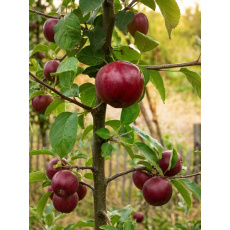


- Excellent Cox-style flavour with a rich, aromatic character.
- Crisp, firm and fine-textured flesh with superb eating quality.
- Heavy cropping variety, ideal for productive home growing.
- Compact garden apple tree, particularly attractive where growing space is limited.
- Attractive golden fruit with red stripes and traditional appearance.
- Award-winning English variety, raised in Kent and recognised by the RHS.


